
ISSUE
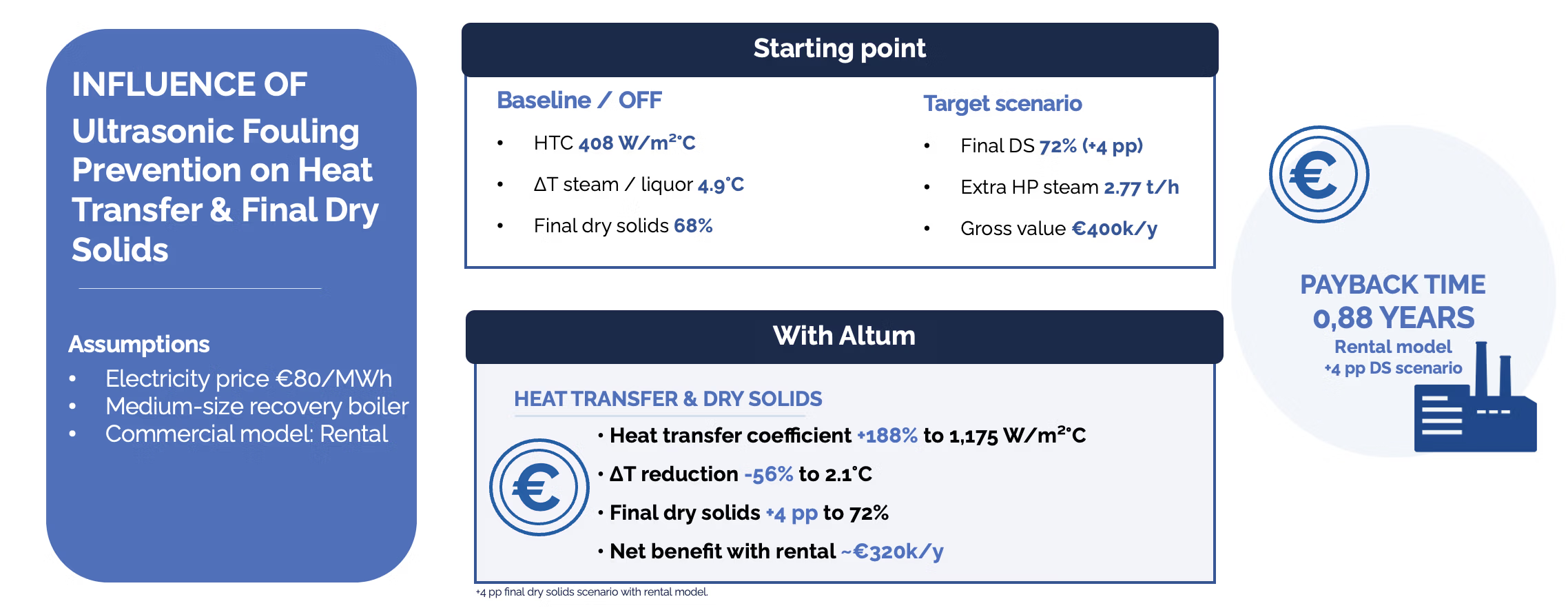
In a black liquor evaporator, fouling on the heated surfaces does more than force cleaning stops. It steadily lowers the heat transfer coefficient and raises the temperature difference (delta T) between the heating steam and the black liquor. A fouled surface also caps how high the mill can drive final dry solids, which directly limits recovery boiler performance. In this case the baseline was a heat transfer coefficient of 408 W/m²°C, a delta T of 4.9 °C and final dry solids of 68%.
SOLUTION
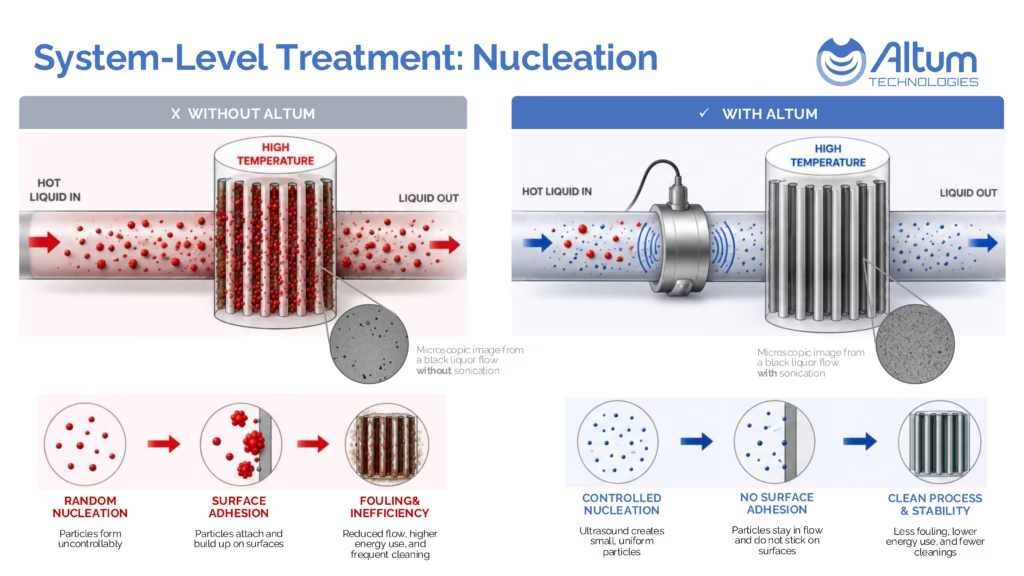
Altum's high-power ultrasound solution was installed externally on the inlet pipe, with no need to dismantle equipment or stop production. Instead of letting scale form uncontrollably on the hot surfaces, the ultrasound triggers controlled nucleation. It creates small, uniform crystals while the black liquor is still in the flow, so the particles stay suspended and pass through rather than adhering to the heated tubes as scale. By keeping the heat transfer surfaces clean, the solution restores efficient heat transfer and allows the mill to push final dry solids higher without the penalty that fouling normally brings.
RESULTS
With the surfaces kept clean, the measured and modelled performance improved across the board:
- Heat transfer coefficient up 188% to 1,175 W/m²°C
- Delta T between steam and liquor down 56% to 2.1 °C
- Final dry solids up 4 percentage points to 72%
The higher dry solids content frees up roughly 2.77 t/h of high-pressure steam, with a gross value of about €400k per year.
The business case
Based on a medium-size recovery boiler, an electricity price of €80/MWh and Altum's rental model, this 4 pp dry solids scenario delivers a net benefit of around €320k per year and a payback time of 0.88 years, under eleven months.