
Case:
137 TONNES OF SCALE LOAD REMOVED PER YEAR IN A ZLD
Continuous ultrasound hardness control at a Zero Liquid Discharge plant in India, with cleaner heat transfer and a more stable process.
INDUSTRY: WATER TREATMENT | COUNTRY: INDIA | PROCESS: ZERO LIQUID DISCHARGE
ISSUE
Zero Liquid Discharge plants recover almost all water from process effluent, which means every dissolved salt is concentrated stage by stage until it crystallises. High water hardness makes this harder: calcium and other scale-forming compounds build up on clarifiers, brine concentration stages and evaporator heat-transfer surfaces. The result is higher energy use in evaporation, frequent clean-in-place cycles, chemical consumption and a less stable overall process.
SOLUTION
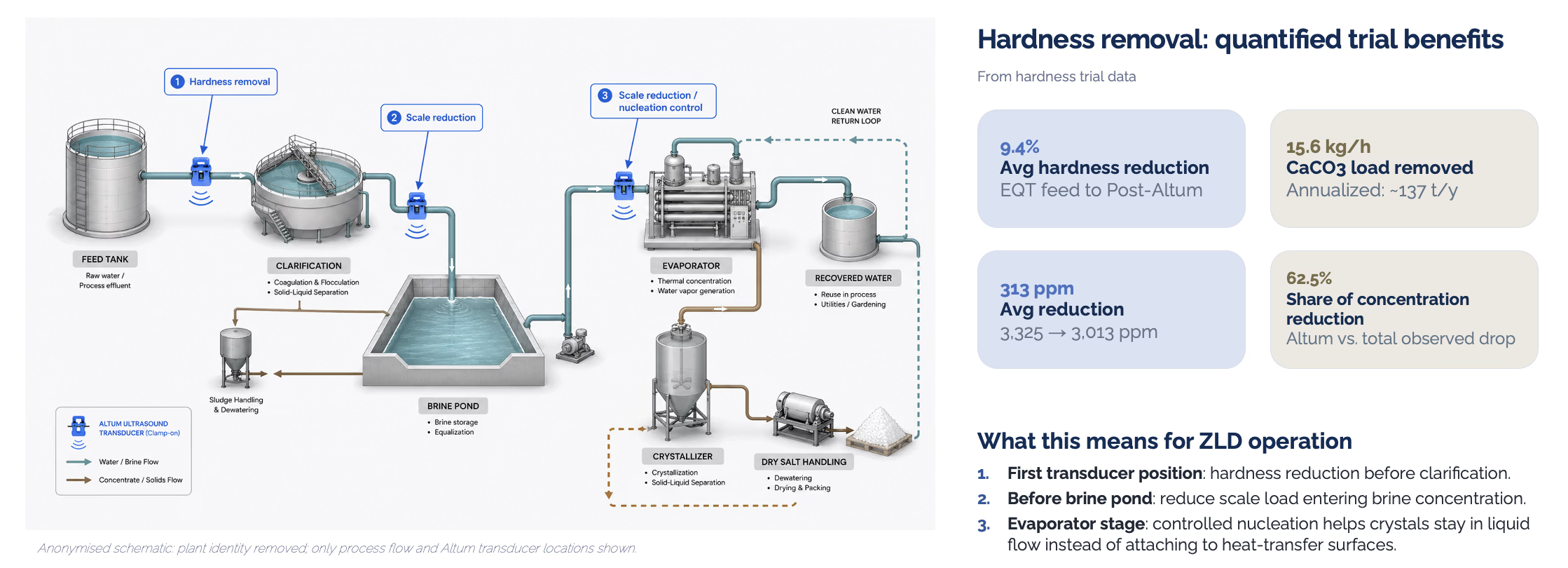
Altum's high-power ultrasound improves the performance of the existing process. It runs continuously at three points along the process, each targeting a different part of the scaling problem. The first position reduces hardness load before clarification. The second sits before the brine pond, lowering the scale load entering brine concentration. The third is at the evaporator stage, where controlled nucleation influences crystal growth so that crystals stay suspended in the liquid flow instead of attaching to heat-transfer surfaces. All units are clamp-on and external, with no process modification and no interruption to operation.
RESULTS
Measured from the hardness trial data, with the solution in continuous operation:
- 9.4% average hardness reduction between the feed and the post-Altum measurement point
- 313 ppm average reduction in hardness (from 3,325 to 3,013 ppm)
- 62.5% of the total observed concentration drop attributable to Altum
- 15.6 kg/h of CaCO₃-equivalent scale load removed, equal to roughly 137 tonnes per year at continuous operation
For ZLD operation this means cleaner heat-transfer area and lower energy intensity in evaporation, less cleaning and reduced CIP and chemical burden, and a more stable process with a better hardness profile and solids handling.
Note: the annualised figure assumes continuous operation. Site-specific savings depend on cleaning frequency, energy price and uptime constraints.
Value drivers: cleaner heat transfer and lower evaporation energy, less cleaning and chemical use, a more stable ZLD process, and non-invasive clamp-on deployment.
To understand why scaling is the hidden cost driver in ZLD, and how evaporation performance links directly to operating cost, read our article on Zero Liquid Discharge.