FREQUENTLY ASKED QUESTIONS

Ultrasonic cleaning is not new. What makes Altum's solution unique?

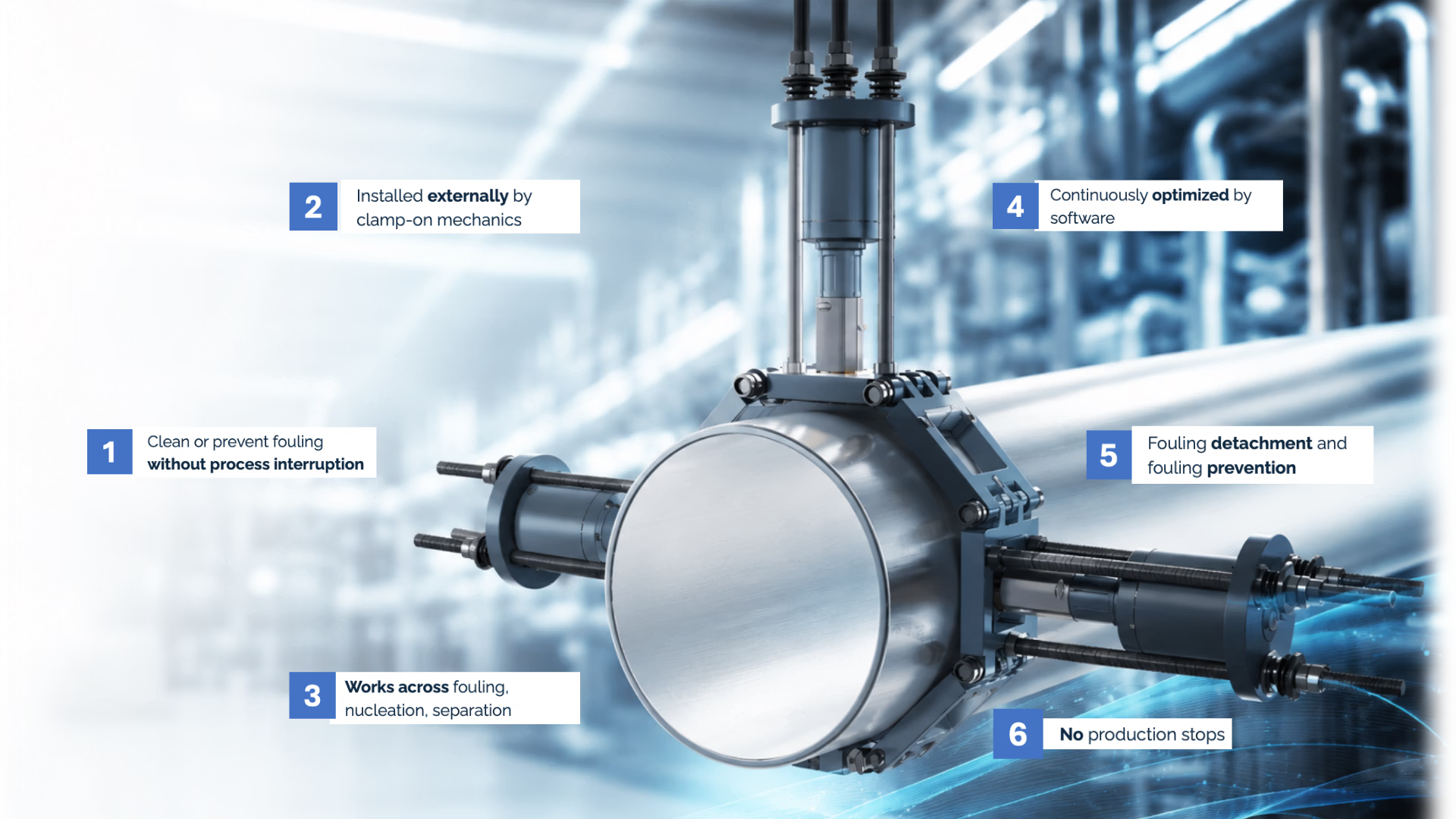
Altum brings ultrasound directly to the process – without stopping production or dismantling equipment. Our solution is external, clamp-on and software controlled, allowing us to precisely adjust ultrasonic power and target it exactly where it delivers the highest value – without stopping the process.

Unlike traditional ultrasonic cleaning baths, Altum’s solution:

  • Works online, during normal operation
  • Is high-power and software controlled, not fixed output
  • Prevents fouling instead of only removing it
  • Can also enhance separation and dewatering, for example increasing dry solids content in sludge

This combination makes ultrasound a continuous process optimization tool rather than a periodic cleaning method.

How does ultrasound prevent fouling?

Ultrasound keeps pipes and process equipment clean by stopping deposits before they can stick and grow. It works continuously, without chemicals, by using sound energy to keep both surfaces and liquids in the optimal condition.

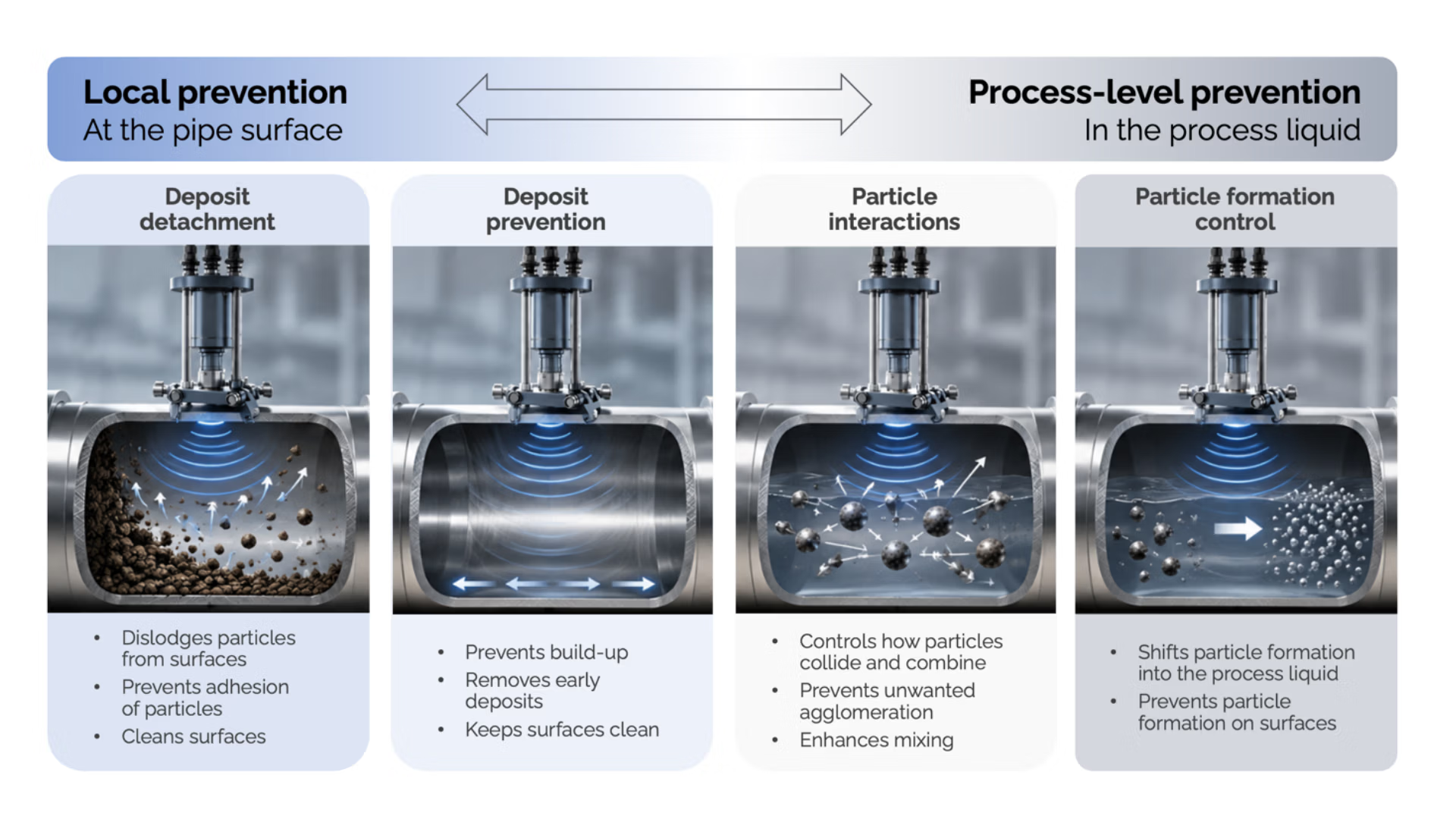
It prevents fouling in two ways: directly at the surface and throughout the entire process.

Keeping pipe surfaces clean (local prevention)

Ultrasound creates gentle, high‑frequency vibrations in the pipe wall and the liquid inside it. These vibrations:

  • Loosen and remove particles that are starting to stick to the pipe surface
  • Prevent new deposits from settling and building up
  • Help keep inner surfaces clean during normal operation

This means fouling is reduced before it ever becomes a problem.

Keeping particles suspended (system‑level prevention)

Ultrasound also improves what happens inside the liquid itself:

  • It enhances mixing, preventing particles from clumping together uncontrollably
  • It creates microscopic bubbles that form and collapse in the liquid (a natural effect called acoustic cavitation)
  • The energy from these collapsing bubbles:
    • Reduces conditions that cause scaling
    • Controls particle formation and growth
    • Breaks larger particles into smaller, more uniform particles

Because most industrial fouling comes from salt crystallization, these small, evenly sized particles are far less likely to stick to metal surfaces. Instead, they stay safely suspended in the fluid and flow out of the system.

The result: less fouling, softer and easier‑to‑remove deposits, longer operating periods between cleanings — all without changing the chemistry of your process.

What types of fouling can you remove or prevent?

Altum’s solution is particularly effective against mineral and crystallization based fouling, including:

  • Struvite (magnesium ammonium phosphate)
  • Calcium based
  • Sulphur deposits
  • Salt precipitation
  • Oxides
  • Biofilm
  • … and more

What are the installation requirements?

Electrical power
European 3-phase (3P+N+PE 400 V, 32 A). A transformer can be used if needed.

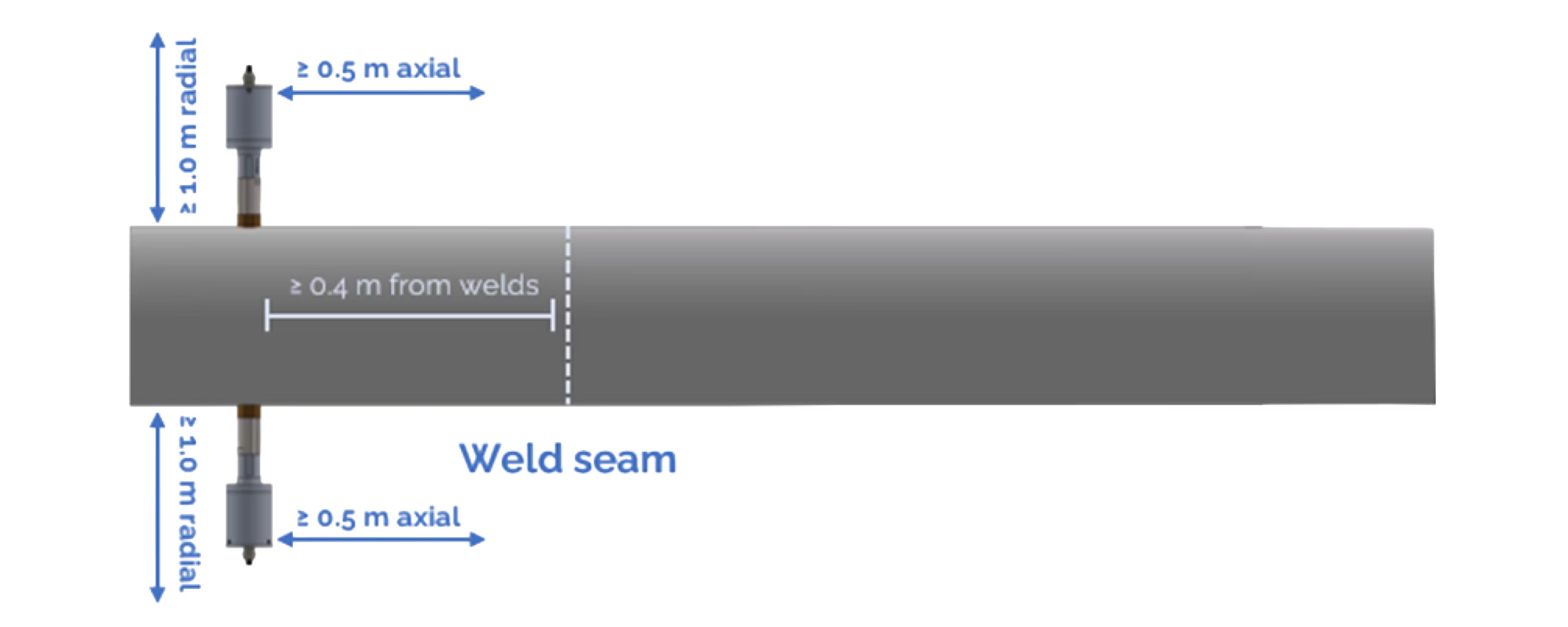
Space for transducer installation

  • ~1 m radial clearance
  • ~50 cm axial clearance
  • Minimum 40 cm distance from weld seams

Note: Existing instrumentation is not negatively affected by ultrasound

Central unit location
Dry area, ambient temperature below 60 °C. Outdoor installations require a weather‑proof enclosure.

Pipe material
Metallic pipes are required. Plastics and fiberglass absorb ultrasound and are not suitable.

Connectivity
Built‑in 4G router, LAN or WLAN. Secure VPN access is used for monitoring and support.

Is installation difficult?

No. The system uses a bolt-on clamp-on solution. No hot work or heavy tools are required. Installation is typically fast but must be done by two people using appropriate PPE and following installation guidelines.

How much energy does the system consume?

Typical consumption is around 1-2 kWh per system, depending on application. Peak power capability per channel is higher, but average consumption remains modest relative to process savings.

What are the advantages compared to traditional cleaning?

Altum’s Software Powered Ultrasound will:

  • Eliminate or reduce downtime
  • Improve steam efficiency
  • Avoid chemicals, washes and manual cleaning
  • Reduce water, energy use and emissions
  • Keep your process running continuously

This translates directly into lower operating costs, higher availability and improved sustainability.

What information do you need to evaluate my case?

We start by understanding your process and fouling mechanism. Useful information includes:

  • Fluid type and composition
  • Fouling type and composition
  • Process parameters: flow rate, temperature, pressure and solids content
  • Mechanical context: pipe diameter, length and wall thickness
  • Operation context: Installation location and available power

The better we understand your process, the more precisely we can configure the ultrasound.

Contact our experts for more information

Check out our latest news and insights